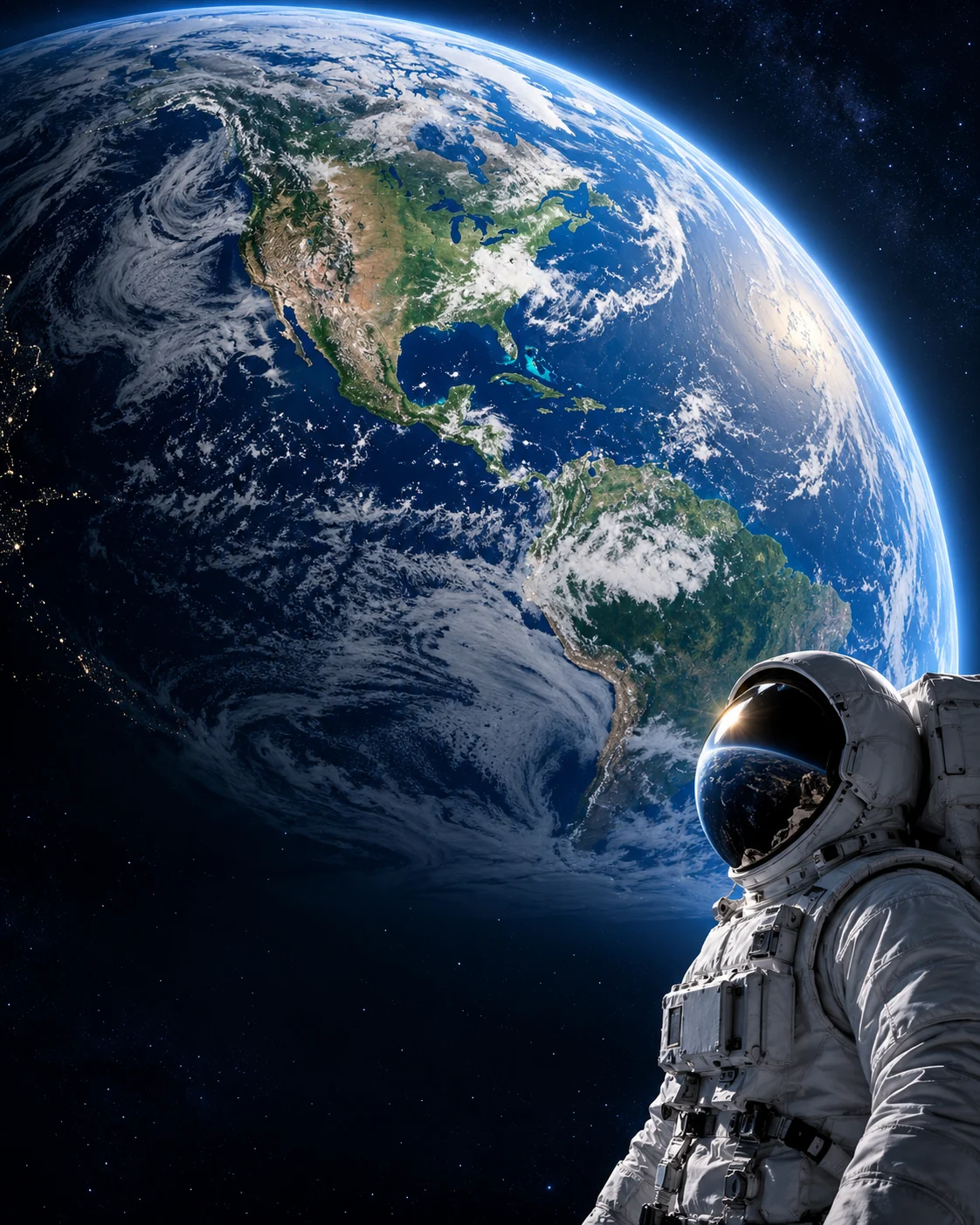
Earth / HUMAN SCENARIO
The human baseline
Known scienceA familiar human, shown as a neutral illustrated baseline.
The environment
- Gravity relative to Earth
- 1.00 g
- Temperature range
- 18–26°C example habitat; climate varies
- Pressure
- 101 kPa at sea level
- Wind
- Variable weather winds
- Habitat
- Ordinary Earth housing
Atmospheric gases
- Nitrogen
- 78.08% dry air
- Oxygen
- 20.95% dry air
- Carbon dioxide
- About 0.04%; variable
- Argon
- About 0.93%
ANATOMY & UNCERTAINTY
Why You Look Different
Visible differences show equipment, a visor and protective layers. The image does not predict inherited anatomy. Changing atmospheric gases cannot instantly redesign a human.
Face
Known need beyond Earth: protection and appropriate pressure. No predicted change to facial structure.
Skin
Known need: thermal and radiation protection. Speculative: altered skin color or thickness is not established.
Eyes
Known need: glare and hazard protection. Speculative: larger eyes are not a demonstrated planetary adaptation.
Body
Plausible but unconfirmed: gravity may change mobility and exercise needs. Inherited body shape across generations is unknown.
Respiratory system
Known: adequate oxygen partial pressure is essential.
Energy & survival
The science behind the scenario
Plausible but unconfirmed: different gravity could alter mobility and exercise requirements. Long-term human development and adaptation on these worlds have not been demonstrated.
Speculative: inherited changes to anatomy cannot be predicted from these environmental values. This illustration is an artistic scenario, not a biological forecast or a transformed user photo.